
Video game characters are more than digital models placed inside a virtual environment. Their movements, reactions, and expressions help determine how believable and responsive a game feels. Whether a character is walking through an environment, jumping over an obstacle, fighting an opponent, or reacting during a story sequence, animation transforms a static design into a character that can interact with the player and the game world.
Unlike animation created only for viewing, video game animation also has to respond to player actions. Characters may need to transition between movements quickly while still maintaining a consistent personality and visual style. This combination of artistic decisions and technical methods allows animated characters to become an important part of both gameplay and storytelling (Pigeon Studio, 2026).
Starting with Character Design
Before a character can move, artists first need to establish its appearance, personality, and purpose within the game. Character designs can begin as sketches before developing into digital models prepared for animation. The design also needs to consider how the character will function during gameplay because appearance and movement must work together (Explain Visually, n.d.).
A character designed for fast movement may require very different animations from one intended for slower or more exaggerated actions. This makes animation part of the character-development process rather than something that is simply added at the end.

Building a Digital Skeleton
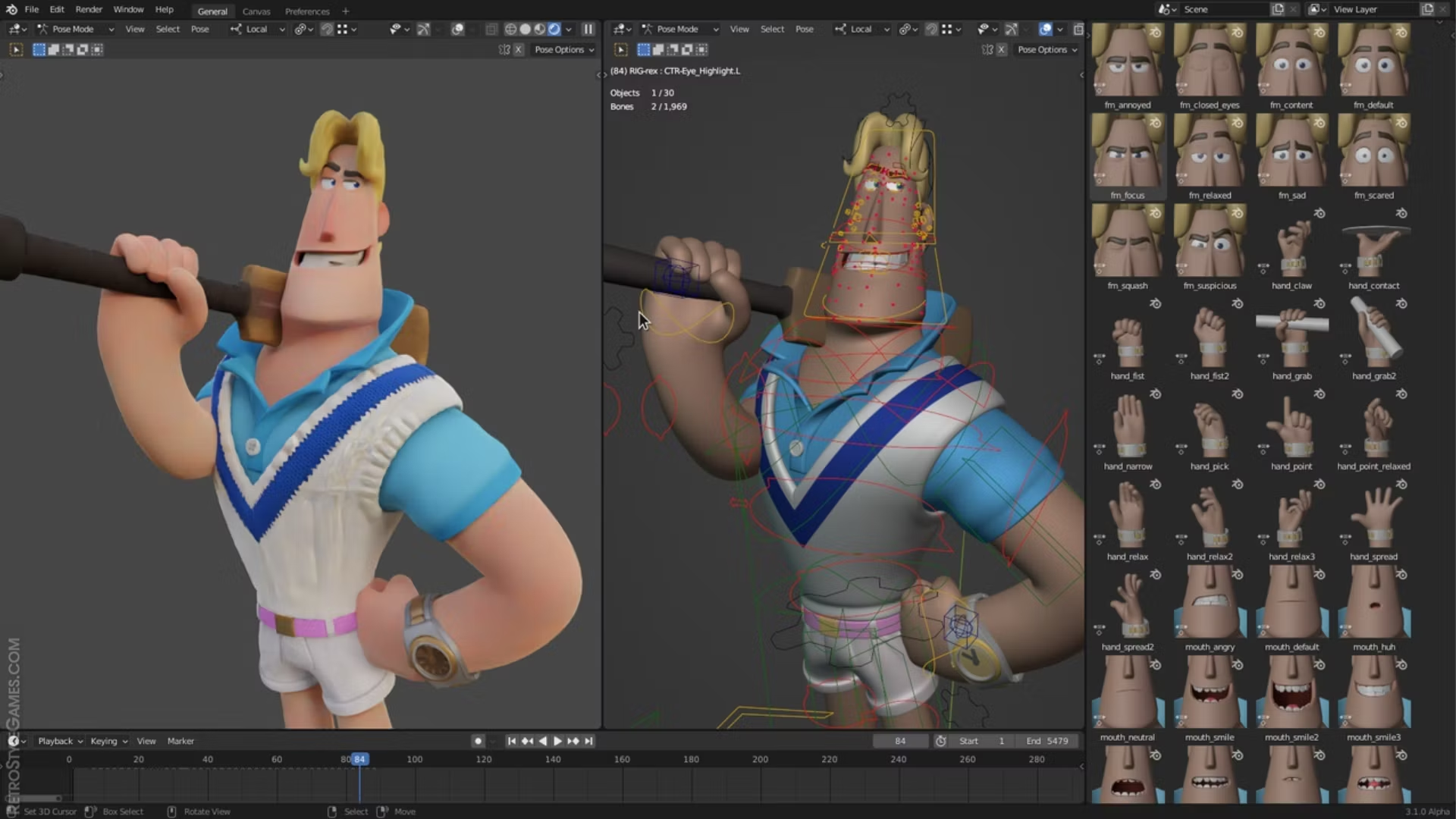
For many 3D game characters, rigging provides the structure needed for animation. A digital skeleton is created inside the character model, allowing different parts of the body to be controlled. The model can then be attached to this skeleton so that it deforms as the joints move (Explain Visually, n.d.).
This underlying structure allows animators to create actions such as walking, running, jumping, and interacting with objects. Although players normally never see the rig itself, it provides an important foundation for the movements they see during gameplay.
Creating Character Movement
Animators can use several techniques to create movement in games. With keyframe animation, important poses are established at different points along a timeline and the movement between those poses is developed into a complete action. Skeletal animation uses the character’s digital skeleton to control movement, while procedural techniques can use algorithms and physics-based rules to generate or adjust movement (Explain Visually, n.d.).
These techniques can be used for everything from basic walk cycles to more complicated actions. The method selected depends on the character, the visual style, and what the character needs to accomplish during gameplay.

Making Movement Responsive to Gameplay
Video game animation has an additional challenge: movement often needs to respond immediately to what is happening in the game. A character might suddenly change from standing to running, begin an attack, jump, or react to something in the environment.
Smooth transitions between these actions can make controls feel more natural and help players understand what their character is doing. Animation can also provide visual information about actions and events occurring during gameplay (Pigeon Studio, 2026).
Expressing Personality and Emotion
Movement can communicate more than physical action. Facial expressions, gestures, posture, eye movement, and body language can help establish a character’s personality and emotional state. Facial animation can include details such as blinking, lip synchronization, and changes in expression that make digital characters appear more expressive (Explain Visually, n.d.).
Games can also use stylized or exaggerated movement when realism is not the main goal. A character’s unusual walk, dramatic jump, or distinctive movements can reinforce personality and support the artistic direction of the game.
Connecting Characters with the Game World
Character animation also helps connect a digital figure to the environment around it. Procedural animation and techniques such as inverse kinematics can allow character movement to adjust to different conditions instead of relying entirely on predetermined animation (Explain Visually, n.d.).
When design, rigging, movement, expression, and responsiveness work together, a digital model begins to feel like a character that belongs within the game world. Animation becomes more than visual decoration because it helps connect character design, storytelling, and player interaction into a single experience.
References
Explain Visually. (n.d.). Character animation for games.
Explain Visually — Character Animation for Games
Jania, A. (2026, June 2). What is animation in video games? Pigeon Studio.
Pigeon Studio — What Is Animation in Video Games?
Wall, S. (2022, March 28). How to make a stylized 3D character model. CG Spectrum. https://www.cgspectrum.com/blog/stylized-3d-character-model-alumon
CG Spectrum article
Konstantinov, P. (2023, November 2). 3D model rigging for games. RetroStyle Games. https://retrostylegames.com/blog/3d-model-rigging-for-games/
Rajpurohit, P. (2024, August 7). Ultimate guide to game animation: Types, principles and benefits explained. 300Mind.
https://300mind.studio/blog/ultimate-guide-to-game-animation/